Agriculture is a basic human practice that fundamentally depends on natural resources,
although it poses a threat to environment. Hence, sustainability has become centre
of discussion in agricultural policy and practice. Several agricultural approaches
coexist and some of these are proponent for higher yields in without considering the
environmental pollution and natural resource depletion, and while the others consider
sustainability agriculture. However, in recent past the ideas of multiple sustainability
issues through an agroecological perspective is gaining popularity amongst the
scholar, researchers and scientists for sustainable agriculture. The major challenge for
the present society is the production of sufficient human food, feed, fiber, and fuel
to meet the needs of a sharply rising population. According to the FAO sustainable
agriculture as the “management and conservation of the natural resource base, and
the orientation of technological and institutional change in such a manner as to ensure
the attainment and continued satisfaction of human needs for present and future
generations”. This approach distinguishes that the earth needs to be in good health
for continuity to provide for future generations. Sustainable agriculture provides a
potential solution to enable agricultural systems to feed a growing population within
the ever changing environmental context. Sustainable agriculture encompasses with
the two different approaches viz. ecocentric approach and technocentric approach.
Sustainable agricultural practices are propelled to protect the environment, judicious
use of natural resource bases, and maintaining and improving the soil health. In
nutshell, sustainable agriculture seeks to increase profitable farm income, promote
environmental stewardship, augment quality of life for farmers and boost production for
human food and fiber needs. The key unifying characteristic in sustainable agriculture
is the fact that the all choices of it may be made by farmers and will largely determine
the way in which they manage their farm in the long term. The COVID-19 crisis, has
shown some interesting examples of how global supply chains may have given way to
more local production and consumption chains in food systems. Considering the macro
context of the world there is a need for pluralistic approach for sustainable agriculture
while considering the agroecology, nature-inclusiveness, biodynamic agriculture,
organic farming, conservation agriculture, regenerative farming, carbon farming,
climate-smart agriculture, high nature value farming, low external input agriculture,
circular agriculture, ecological intensification and sustainable intensification. Many
of the approaches share similar environmentally friendly practices, when it comes
to implementation, the choice of approach depends very much on local contexts and
specific priorities involving all the components of farming i.e. agriculture, horticulture,
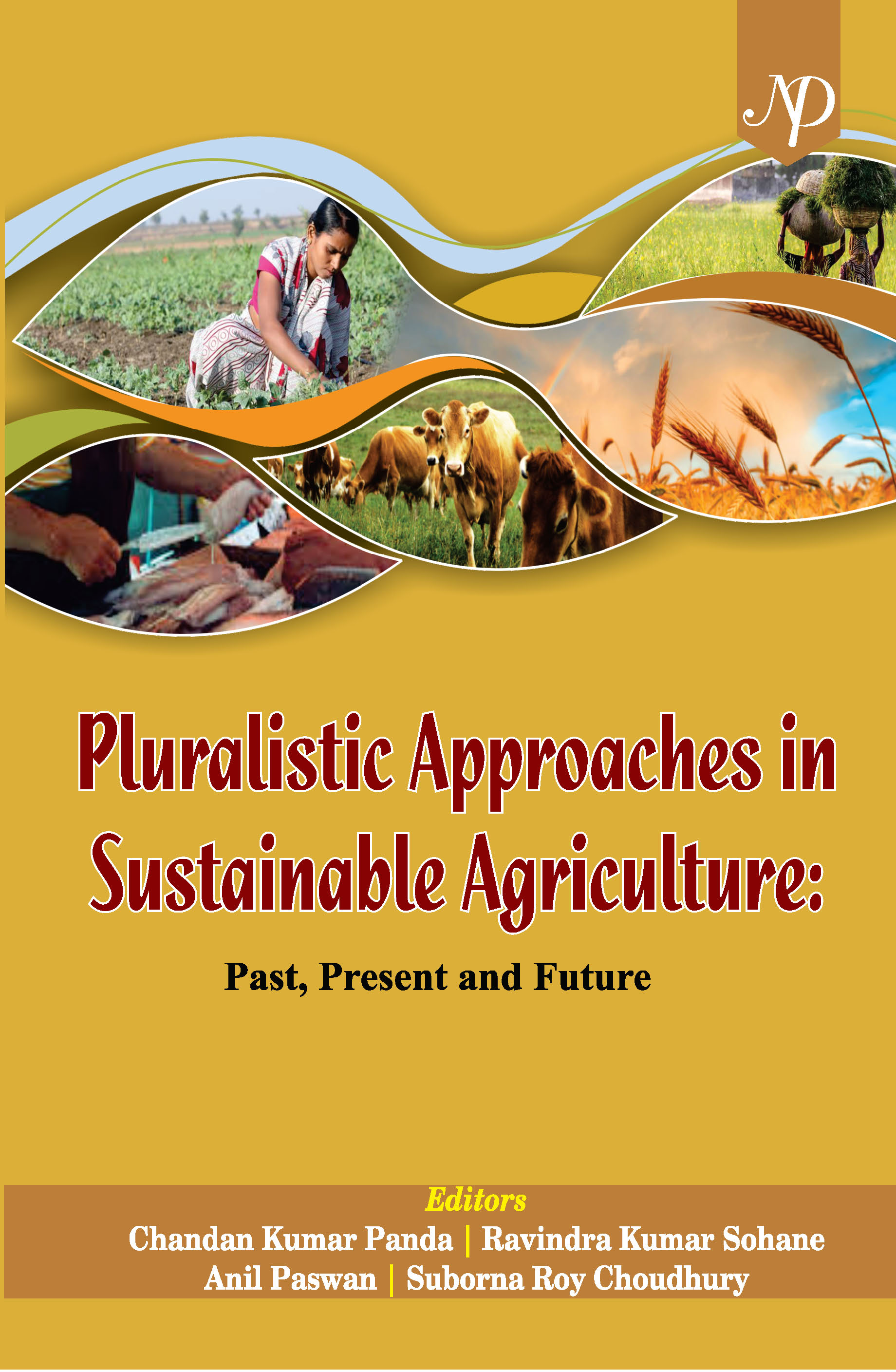
animal husbandry, dairy and fishers. This book on “Pluralistic Approaches in
Sustainable Agriculture: Past, Present and Future” includes all the aspects.
- Be the first to review this product
WRITE YOUR OWN REVIEW
How do you rate this product? *